
A minority of Iranians accuse Israel of planning the territorial disintegration of Iran. The following argument strongly refutes their claim.


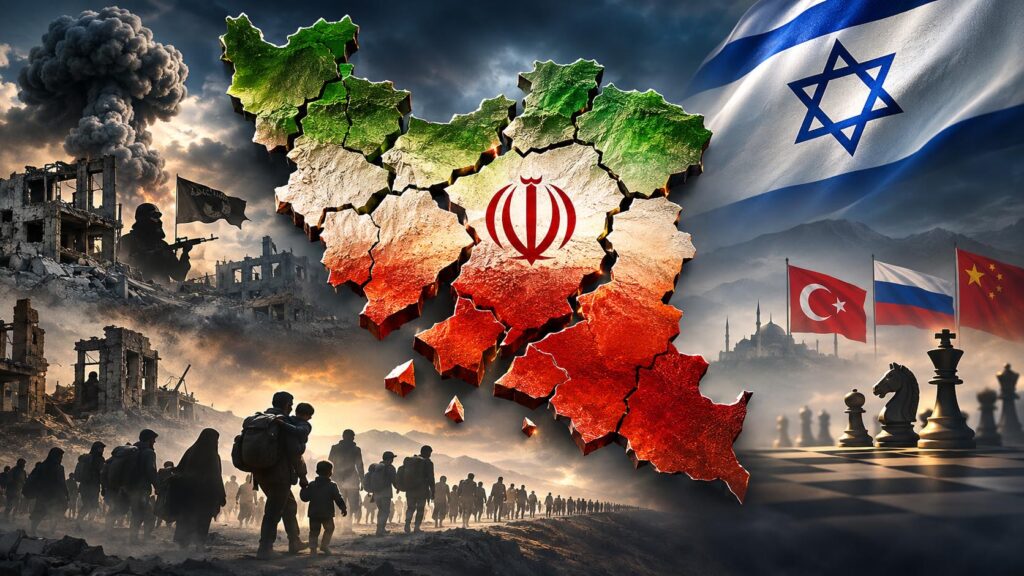
Article by Babak Jabarzadeh Tabrizi.
From a strategic and geopolitical perspective, analysts and regional experts argue that the territorial disintegration of Iran is contrary to Israel’s long-term security interests.
While fracturing a regional adversary might seem advantageous on the surface, the resulting fallout would likely create a far more volatile and unmanageable environment for Israel.
The primary reasons Israel avoids pursuing or supporting the balkanization of Iran include:
1. The Threat of Regional Chaos and “Syrianization”
1-A) Power Vacuums:
The collapse of the central Iranian state would leave a massive power vacuum across a vast geographic area.
1-B) Transnational Terrorism:
Much like the civil wars in Syria, Iraq, and Libya, a fragmented Iran would likely become a breeding ground for uncontrolled extremist groups, including Sunni jihadists (like ISIS or Al-Qaeda affiliates) and radical Shia factions, which could target Israeli interests globally.
1-C) Proliferation of Weapons:
A chaotic collapse would compromise the security of Iran’s massive conventional weapons stockpiles, ballistic missile technology, and nuclear infrastructure, potentially leaking them to non-state actors and terrorist networks.
2. The Kurdish Domino Effect and Turkish Instability
2-A) Regional Contagion:
Iran has a significant ethnic Kurdish minority. The creation of an independent Iranian Kurdistan would likely trigger intense geopolitical anxiety and military responses from neighboring Turkey, Iraq, and Syria.
2-B) Destabilizing Alliances:
Israel maintains a complex but vital strategic approach to Turkey. Instigating Kurdish separatism inside Iran could severely damage the already unstable ties with Ankara and plunge the broader Middle East into a multi-nation ethnic conflict.
3. Chronic Refugee Crises and Regional Strain
3-A) Mass Displacement:
The territorial collapse of a nation of nearly 90 million people would trigger an unprecedented humanitarian and refugee crisis.
3-B) Strain on Partners:
Millions of displaced people would flood into neighboring countries like Azerbaijan, Turkey, Iraq, and the Gulf States. Destabilizing these countries—many of which are pragmatic or covert strategic partners of Israel—would directly harm Israeli regional interests.
4. Loss of an Accountable Adversary
4-A) Deterrence Failure:
A central government, even a hostile one like the Islamic Republic, is a an actor that can be deterred through conventional military, economic, and diplomatic pressure.
4-B) Unpredictable Entities:
If Iran fractures into competing ethnic or tribal warlords (Persians, Azeris, Kurds, Balochis, Arabs), Israel would lose a singular address for deterrence. Dealing with dozens of unaccountable, unpredictable militant factions makes strategic signaling and conflict management nearly impossible.
5. Increased Aggression from Neighboring Powers
5-A) Geopolitical Scramble:
The disintegration of Iran would invite immediate military intervention and political manipulation from Russia, China, and Turkey, all seeking to secure energy resources and strategic buffers.
5-B) Worse Security Environment:
Israel could find itself dealing with an aggressive Turkish or Russian sphere of influence directly on the borders of the collapsed state, replacing a familiar adversary with a much more powerful global competitor.